
West Virginia Hospitals are Advancing Care in West Virginia
Across West Virginia, hospitals are strengthening care through innovation, compassion, and an unwavering commitment to their patients. These real-life stories showcase how dedicated healthcare teams are saving lives, expanding access and supporting West Virginia communities every day.
Because when healthcare is this personal and this committed, its impact reaches far beyond hospital walls.
Read the full stories to see the difference.
Strong Hospitals = A Stronger West Virginia
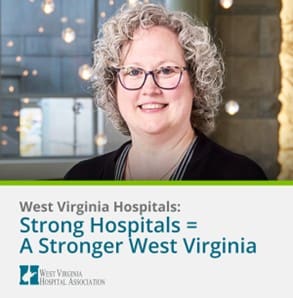
Angie: Saving Lives Through Early Detection
Early Detection. Compassionate Care.
A Stronger Fight.
When Angie faced breast cancer, early detection and a dedicated care team changed her path forward.
A breast cancer diagnosis can feel overwhelming, but for Angie, early detection made all the difference.
When doctors identified the cancer early, it opened the door for faster treatment and better outcomes. Just as important as the medical care she received was the team that supported her through every step of the journey.
At the CAMC Breast Center and CAMC Cancer Center, Angie found more than advanced treatment. She found physicians, nurses, and specialists who listened, encouraged, and stood beside her with compassion and care.
Their patient-centered approach helped guide Angie through one of the most difficult chapters of her life with strength and confidence.
Stories like Angie’s show why early detection and supportive care matter so deeply. Because when patients are surrounded by expertise and compassion, they’re never alone.
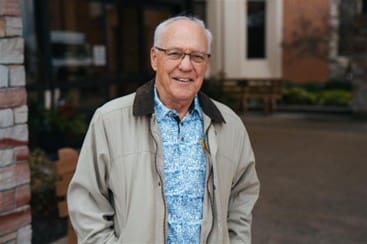
Charles Foreman: Care That Never Gave Up
Three Years of Care That Changed Everything
When Charles Foreman faced the possibility of amputation, his care team saw a different outcome.
For Charles Foreman, a severe wound threatened something life-changing: the possible loss of his leg.
But at WVU Medicine’s Wound Care Center, his care team refused to see the situation as hopeless. Instead, they committed to a long-term plan focused on healing, recovery, and preserving his mobility.
For more than three years, the team treated not just Charles’s wound, but Charles himself. They learned his story, supported him through setbacks, and built the kind of trust that turns healthcare into partnership.
Their persistence and expertise ultimately saved his leg.
Charles’s journey is a powerful reminder that patient-centered care isn’t just about treatment plans. It’s about relationships, commitment, and a care team that refuses to give up on the people they serve.
Rachel: Finding Relief and Expert Care
A Personalized Path to Relief
When Rachel needed treatment for uterine fibroids, expert care and innovative procedures helped her find a solution that fit her life.
For Rachel, dealing with uterine fibroids meant navigating symptoms that affected her day-to-day life and well-being.
When exploring treatment options, she turned to the specialists at CAMC, where physicians work closely with patients to find solutions tailored to their needs.
Rachel ultimately chose uterine artery embolization, an innovative, minimally invasive procedure performed by Dr. Deipolyi that treats fibroids by blocking the blood flow that causes them to grow.
With guidance from her care team, Rachel felt confident in her decision and was supported throughout the process.
Her experience reflects the importance of access to advanced treatment options and compassionate care teams who help patients make informed decisions about their health.
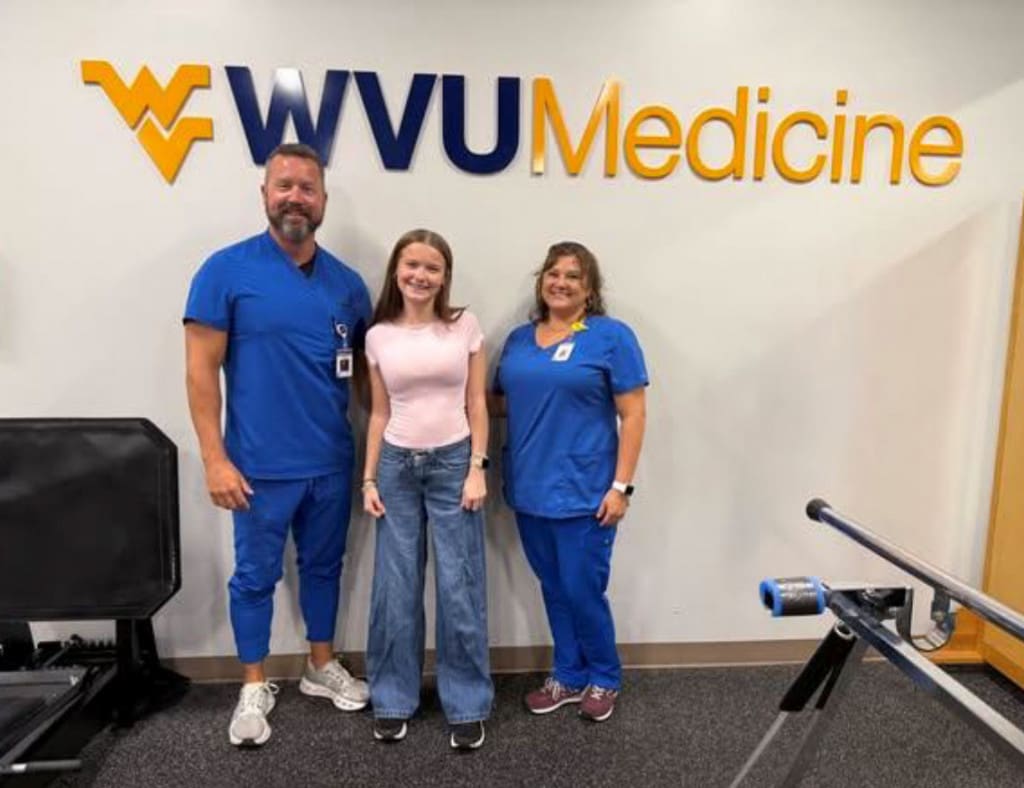
Thomas Hospitals Patient Spotlight:
Caitlin’s Comeback Journey
At just 15 years old, Caitlin is proving that determination and the right support system can change everything. In July 2024, she sustained a spinal cord injury in an ATV accident and was given just a 3–5% chance of regaining feeling in her legs. When she started therapy, she couldn’t crawl, sit upright, or even stand.
Today, she’s walking with crutches, shopping, learning to drive, and standing tall — literally. Caitlin began her rehabilitation at Nationwide Children’s Hospital before continuing her recovery at Thomas Hospitals Physical Therapy in South Charleston. There, she’s been working with Physical Therapist Barry Stover and Occupational Therapist Jodi Chapman. From sliding board transfers to walking 100 feet, Caitlin has made steady, dramatic progress — often surpassing goals faster than anyone expected. Her hard work hasn’t gone unnoticed, and her therapists have kept her motivated with creative rewards. One unforgettable moment? Caitlin was challenged to stand for seven minutes. If she did it, she got to shave one of her therapist’s heads — and she did! “When you challenge her, she rises to the challenge,” said Jodi. “Anytime you help a patient regain independence, it’s huge,” added Barry. “But for a young woman with her whole life ahead of her, it means even more.”
From not being able to push the handicap button and get through the door fast enough to walking through stores on her own as part of her occupational therapy, Caitlin has worked hard to reclaim her independence. “I’ve had a lot of support from the therapists, and I’ve made a lot of progress,” Caitlin said. “The most memorable moment? The first time I walked again.” Now, she’s not only standing — she’s standing out. Caitlin was selected as a Hoops Family Children’s Hospital ambassador and a HealthNet patient representative, sharing her story to inspire others. We’re incredibly proud of Caitlin’s progress and our incredible Rehabilitation Services team for helping her reach each milestone.
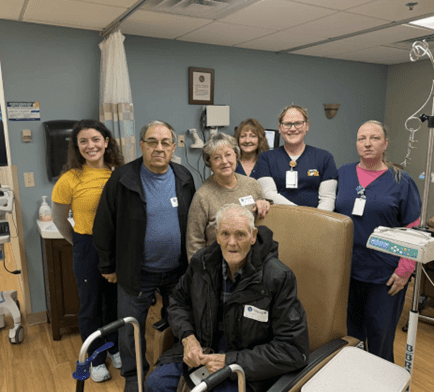
Roger Leary, an Infusion Center patient at WVU Medicine St. Joseph’s Hospital, has faced hardship since birth. Born deaf and abandoned as a child, he was taken in by a family in Coalton, where he began building a life rooted in resilience.
Years later, he returned to the same property, where new owners Jim and Pat Rossi learned his story and welcomed him into their lives, providing him with a home, care, and a strong sense of belonging.
In December 2025, Roger was diagnosed with colon cancer. He now receives treatment every two weeks, with the Rossi family faithfully by his side. Their unwavering love and optimism have uplifted not only Roger, but also the hospital staff and fellow patients at St. Joseph’s. Throughout his journey, the Coalton community continues to support him.
Roger’s story is a powerful reminder that healing extends beyond medicine. Compassion, connection, and community are essential parts of true care.
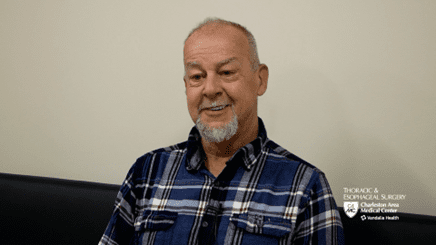
“I’m glad they found it so early.”
A routine scan changed everything – and fast, innovative care made all the difference.
What began as a routine screening became a life-saving moment for retired coal miner Tommy Wills.
Doctors detected lung cancer early, before symptoms appeared and before the disease could spread. That early diagnosis allowed the care team at Charleston Area Medical Center (CAMC) to act immediately.
Tommy underwent same-day robotic, lung-sparing surgery, a highly advanced procedure designed to remove cancer while preserving healthy lung tissue. The minimally invasive approach meant less pain, faster recovery, and a quicker return to the life he loves.
Stories like Tommy’s show why access to expert, innovative care matters. When early detection meets advanced technology, it doesn’t just treat disease – it saves lives.
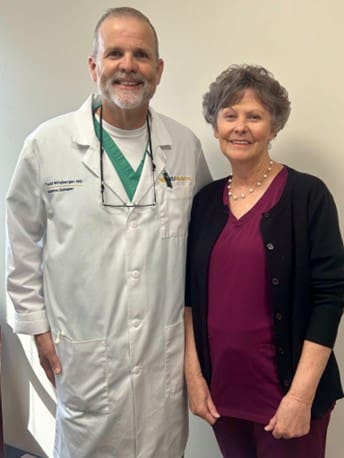
When Access Matters Most, Care Finds a Way
One hospital team refused to let transportation stand between a patient and life-changing surgery.
Healthcare only works when patients can reach it.
When a woman was unable to travel to her critical surgery appointment, the team at Thomas Memorial Hospital stepped in – personally driving her to ensure she received the care she urgently needed.
True access to care means removing obstacles before they negatively impact outcomes.
Because great hospitals don’t just provide treatment, they make sure no patient is left behind.
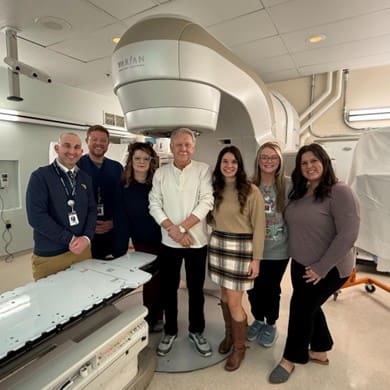
Care That Treats the Person, Not Just the Cancer
For Russell, compassion was as powerful as medicine.
A cancer diagnosis changes everything, but the right care team can change how the story unfolds.
Russell found that team at WVU Medicine’s Thomas Memorial Hospital.
“From the get-go, they were upbeat and always smiling. My appointments were always at 7 a.m., and the staff was joyful and encouraging every single day.”
That unwavering positivity helped carry him through treatment and ultimately toward remission.
Because healing requires more than clinical expertise, it demands humanity, encouragement and people who show up fully for their patients.
At WVU Medicine, care is delivered with both skill and heart.